
Someone emailed me a cartoon of a principal on the phone with a parent saying, “I wouldn’t say your son is a bad child. He’s gifted in disruptive behavior.”
 Augh! Not the phone call you want to get!
Many years ago when I taught 4th grade, I had a student, Tony, who constantly made clever comments to me over the heads of his classmates. While his comments were very funny, they were also disruptive to the flow of the lessons.
What Causes Disruptive Behavior in Class
Disruptive behavior in class can be the result of many things. It could be, as in Tony’s case, just a way for an exceptionally bright student to entertain himself, but continuous disruptive behavior is often a symptom of underlying learning/processing skills weaknesses that cause challenges with learning, attention, or flexibility.
Michael: A Bright Student Who Jokes Around
Michael is a bright, dyslexic student who jokes around with his classmates instead of doing his work. He is in trouble all the time, but it covers the fact that reading and writing are extremely slow and laborious for him.
Adrienne: Constantly Asking for Help
Adrienne constantly asks her classmates, teacher, and parents for help getting started on assignments. She never seems to have any idea what the instructions are. Her disruptive behavior is not the result of not listening but of not being able to listen and take in information effectively due to an auditory processing problem.
Sam: Screaming When He Doesn’t Get His Way
Five-year-old Sam manipulates his parents and screams when he doesn’t get his way. So far, he’s not showing signs of academic challenges, but his behavior disrupts every aspect of family life. Sam has retained reflexes that cause him to operate in “fight or flight” mode all of the time. The only way he can feel secure is if he is in control, even if he gains that control with out-of-control behavior.
The Ladder With Unstable Rungs
We all rely on our underlying processing/learning skills to help us feel safe and to learn and function comfortably. If any of the underlying skills are weak or not supporting us well, we may feel like we’re trying to do a job at the top of a ladder that has unstable rungs.
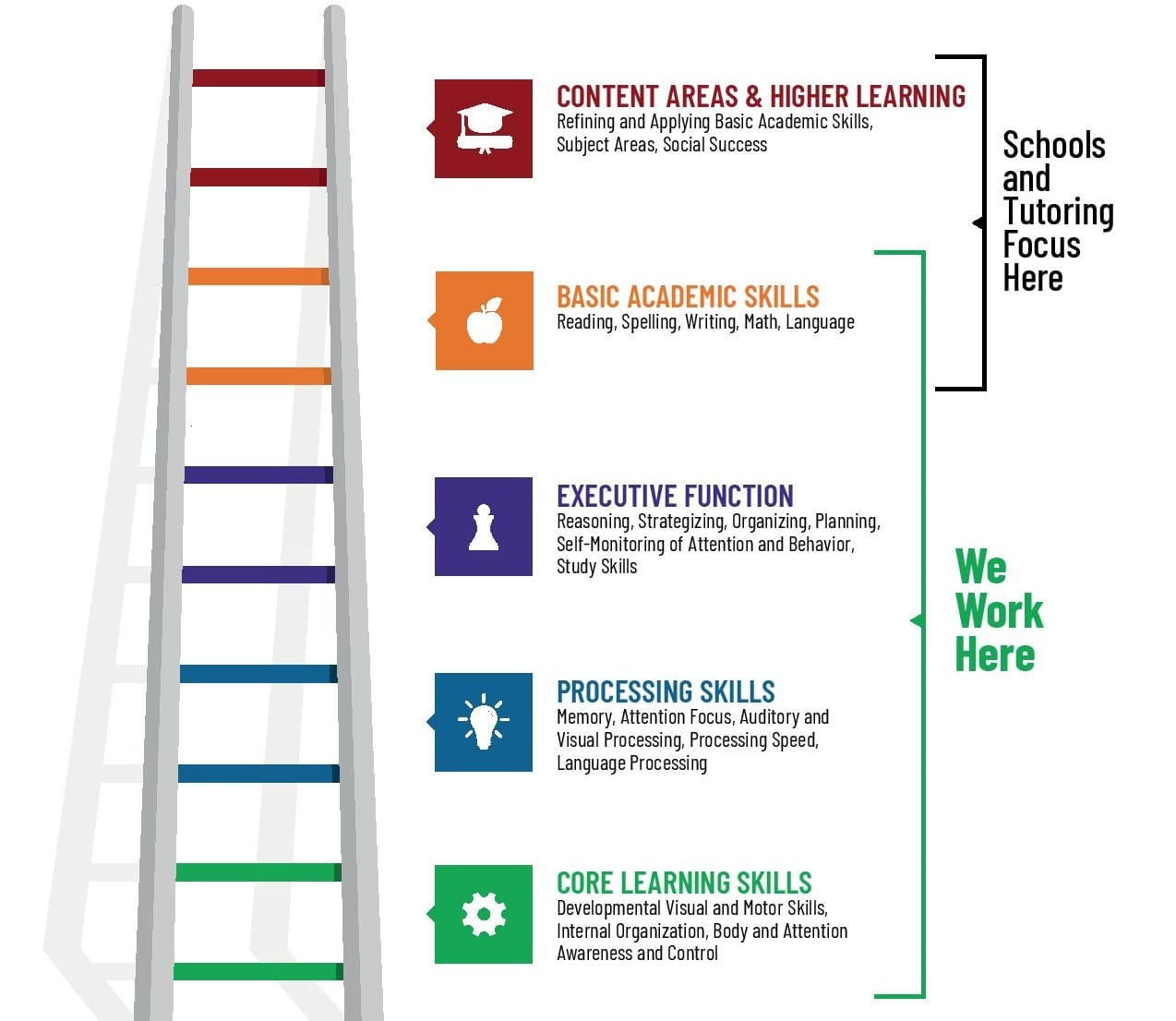
Disruptive behavior often has its root in weak underlying processing or learning skills. Thankfully, the brain is amazing and these critical skills can be developed through targeted and intensive brain training.
What a joy it is to see disruptive behaviors disappear, as they are no longer needed to help students navigate their world with weak underlying skills.
If your child is getting an A in “disruptive behavior,” as a result of learning or attention challenges, there is hope.
Quick Answers
What causes disruptive behavior in the classroom?
It can be the result of many things, but continuous disruptive behavior is often a symptom of underlying learning/processing skills weaknesses that cause challenges with learning, attention, or flexibility.
Can a learning problem look like bad behavior?
Yes. A bright dyslexic student may joke around to cover the fact that reading and writing are extremely slow and laborious, and a child with an auditory processing problem may constantly ask for help because of not being able to listen and take in information effectively.
Can disruptive behavior go away?
Yes. These critical skills can be developed through targeted and intensive brain training, and the disruptive behaviors disappear as they are no longer needed to help students navigate their world.

Jill Stowell, M.S.
Founder and Executive Director of Stowell Learning Centers and bestselling author of At Wit's End and Take the Stone Out of the Shoe. For more than 40 years, Stowell Learning Centers has helped children and adults correct the root causes of dyslexia, learning, and attention challenges. More about Jill
Is your child working harder and still struggling?
Talk with a Learning Specialist for free. We'll help you understand what may be getting in the way and what to do next.
Or call 877-774-0444 | Chino | Irvine | Pasadena | Remote programs nationwide
Not sure where to start? Take our free Learning Challenge Quiz
Ready to take the next step?
Speak to a Learning Specialist to learn more about the results from students and parents at Stowell Learning Centers.